Thursday, March 17, 2005

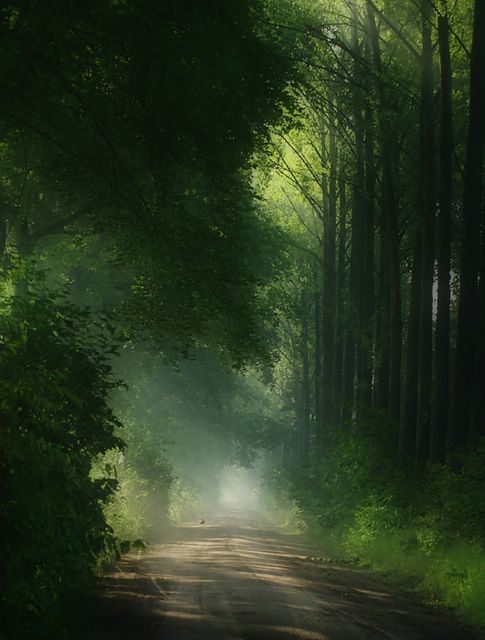
Picture; Tree-lined lane


Posted by Hello

Can Morality Exist if There is No God?

On Thu, 17 Mar 2005 07:45:38 -0800 (PST),

Anonymous wrote:
>So can morality exist even if there is no god? I say that it
> can, and is "real", and serves us all as a society... Morality is a social
> contract of sorts, and, in total, does things like keep your kids relatively
> safe...

Depends on what you mean by "morality." The social contract you speak of sounds more like ethics than morality, but it's a semantic distinction, I suppose.

If you begin from a naturalistic perspective--and have faith that there is no supernatural reality--then morality is a human/societal/natural construct, no more or less valid than the rules by which bees and birds and slime molds and boulders act. This gets us back to the basic problem; if our existence/thoughts/etc. are the result of only-nature then they are ultimately based on the random motions of atoms and cannot be said to be either good or bad. This holds true if you are speaking of an individual or a society, so one cannot say that Hitler or Stalin or Gandhi or Mother Teresa did things that were good or bad. "Might makes right" rules the day (although "right" is meaningless).

The only way there can be a true "good" or "bad" is if those things are defined from outside the natural system. It needs a supernatural mover, although not necessarily the Christian God.
If God is real, then what he does, as the Creator, is--by definition--Good. His Will defines what is good. That's why the Christian definition of sin is so broad. A sin is not just something that goes against the Ten Commandments, it's anything--thought, word, or deed--that goes against God's will.

Tuesday, March 15, 2005

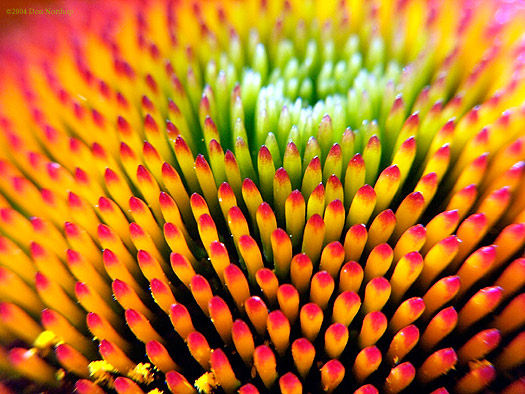
Picture; Closeup of a flower


Posted by Hello

The Beauty of Competition

Every flower is competing for pollinators. Those with the brightest,
most attractive colors and smells (at least to their pollinator), will
get the most attention and reproduce most successfully.

As the wildflowers come out on the roadsides in the next few months,
we will be seeing the results of competition. And sex.

Three Trout

Once upon a time there were three trout, all of them brothers. They
spent their days swimming in the swift currents of a small, clear
river, catching juicy bugs and playing among the green and gray
stones.

But one of the brothers was unhappy. "Why must we constantly swim
against the current yet never get anywhere?" he asked his brothers.
"I, for one, am no ordinary trout. I will go further than anyone else
ever has before." With a sudden burst of speed he shot up the river
and was soon out of sight.

He swam and swam, all day and all night. Soon the river began to
narrow. The water became shallower and colder and bounded down rocky
cataracts and over white, misty falls. The trout would not give up.
He leaped every obstacle and pressed on, high into the mountains. At
last the water turned to a mere icy trickle, and with one valiant
leap, the trout landed himself next to a melting snow bank where he
lay gasping and heaving in the summer sun until a passing bear spotted
him and ate him in a single gulp.

The second brother was unhappy too. "Why fight the current? It's
never-ending. What's the point?" And with that he stopped swimming
altogether. He let the river carry him down towards the sea. The
river widened and slowed and food was abundant. The second brother
finally found himself in the open sea. "How beautiful! And look at
all the food." At that very moment he was gobbled up by a salmon
heading back up the river to spawn and die.

The third brother was no different from the others. The current was
tiring and relentless but he was afraid of going upstream or down. He
searched along the river's edge for some solution and chanced upon a
small inlet that led him into a calm pond. Food was plentiful and
there was no current. After a few weeks living the good life he had
become fat and happy. "This is the life!" But soon he noticed that
the pond was getting smaller and the water was uncomfortably warm. He
tried to go back to the river, but the inlet had long since dried up.
In another week he found himself gasping for air in the muddy goo of
the fast evaporating pond, now a mere mud puddle. He too was eaten by
a passing bear.

In the river, the other trout would often wonder about what happened
to the three brothers. But in time, they forgot all about the
brothers as they swam in the swift current, catching bugs, and playing
among the stones.

Negative Hallucinations

How many times have you looked for something repeatedly, such as your keys, and then someone else finds them right where you had already looked. It's quite possible to NOT see things that ARE there. Take a look at this article, for example.

But just because I don't see it doesn't make it not there. If objective reality were controlled by my mind (as in The Matrix), then people coked up enough to think they can fly wouldn't die from falls off high buildings.

Therefore, just because someone doesn't believe there is a God has nothing to do with whether or not God exists, so one can have a wrong opinion about this matter.
If there IS a God (or more broadly, a supernatural reality), the wrong opinion on this matter has eternal consequences. If there IS NO God and one holds that opinion, there are no eternal consequences, but your opinion on the matter is meaningless. It is the result, ultimately of the random motions of atoms, and has therefore, precisely the same validity as does rolling a die to decide one's opinion.

Saturday, March 12, 2005

The Right Question

You are asking the right question, the question most men don't even think about and don't have the courage to face. If there is no eternity, then what we do here DOES NOT MATTER.

Be a rapist, a child-pornographer, a terrorist, a Mother Teresa, a Buddha, or a Christ. If there is no eternity then it does not matter.

Be a great architect or surgeon a Billy Graham or a Genghis Khan. If there is no eternity it does not matter. We are all just the ants on the proverbial log, building shit-castles as the toilet flushes.

But if there is an eternity then what you do here and now "echoes through eternity."

He is no fool, who gives what he cannot keep to gain what he cannot lose. -Jim Elliot

Thursday, February 24, 2005

Blink by Malcolm Gladwell

Just got finished reading Blink by Malcolm Gladwell, author of The Tipping Point. This guy is a great author, and the concepts he unveils are absolute mental crowbars. They give insight into so many different areas.

Blink deals with how we are able to sometimes make very accurate assessments with minimal information, often without even knowing how we do it. For example, think of the art antiquities dealer who can instantly spot a fake statue, but can't explain how she knows it's a fake. We do this in everyday life as well. Sometimes you see a friend or relative and know somethings bothering them immediately, even though they seem to be acting quite normal to an outside observer.

Gladwell discusses how to cultivate this ability and also it's limitations. Particularly interesting is the research on how too much information is actually counter-productive, and the application of this process by Paul Ekman to mind-reading (at least it seems like mind-reading). He really is talking about detecting when others are lying. Ekman uses his techniques to train the Secret Service, FBI, and others.

Read it!

Monday, February 07, 2005

Those Who Criticize Others

It seems to me that those who most readily criticize others--whether it be with malicious comments or jokes at their expense--are attempting to bolster their own lack of self-worth and feelings of inferiority. The truly confident person has no need to look for others' shortcomings and even less to comment on them. I think it's also true that we tend to criticize most in others those flaws which we have to the greatest degree.

No great insight there I guess. It's been said before. But it struck me forcefully because of recent events. God forgive me for criticizing others.

Judge not, that you be not judged. For with what judgment you judge, you will be judged; and with the measure you use, it will be measured back to you.
--Matthew 7:1-2

Sunday, February 06, 2005

Controlling My Thoughts

Because of recent events, I have had trouble controlling my thoughts. I get angry about some past offense, and my mind gets into a pattern of imagined diatribes or vengeful actions against the object of my anger. I fill with rage and sorrow and may go for hours repeating the same thoughts and getting more and more upset. I feel the blood run to my face and neck, and my stomach sours. I try various ways of distracting myself. Sometimes these work, but often they don't. The negative thoughts keep blazing up anew.

This struggle has caused me to realize just how important thought-control is to achieving our goals; whether the goal is getting a good nights sleep, doing well on an upcoming exam, or treating others the way we should. Imagine what it would be like if you perfectly controlled every thought. You would never feel lonely or angry or defeated unless you wanted to.

This ability to control ones thoughts seems to be what is lacking in Stoic philosophy. Stoicism points out that our minds can control our emotions, and therefore happiness or calm is always within our power. But Stoicism only tells us we have the power, yet doesn't get us closer to using that power. It's all well and good to know that your child's sudden death need not upset you--that instead you can recall the happy times and count yourself lucky for having known him, but being able to pull this off in the midst of the tragedy is quite another thing. Still, memorizing Stoic sayings, such as those that pepper this blog, has helped tremendously. Such sayings make guest appearances in my thoughts throughout the day (and night, often enough).

My Christian faith points to several solutions as well, and actually gives aid, rather than just encouragement. "Ask and you shall receive, that your joy may be made complete." "I can do all things through Christ who strengthens me." "I am the Lord your God, who takes hold of your right hand and says, do not fear, I will help you." The reading of verses such as these, combined with prayer and singing, has often pulled me from the thoughts that I wrestle with. But not always. I also feel that many of the other solutions I'm mentioning here have been given to me by a loving and compassionate creator. Especially this next.

Friends can certainly help. At least three different people have provided comfort and help in three different ways. One, having gone through similar things, is able to encourage me by showing that there is life on the other side of the crisis. And not only life, but a better life. Another, has given me the very manly advice, "get over it." "Stop being a wimp and a fool." That seems harsh, but it was actually very needed and helpful. The third friend is a master at distracting me. He engages me in conversation about other things, refuses to feed my obsessive comments, and gets me playing chess or watching movies.

Still other help comes from psychology. Thought-stopping--noticing the start of the unwanted thoughts, mentally screaming STOP!, relaxing myself with a few deep breaths, and then rewarding myself with pleasant thoughts--is very effective. It would probably be even more effective if I rehearsed the behavior when I don't need it, rather than in the midst of the crisis. Another helpful method is in talking to myself as a friend. I can lend myself encouragement and praise myself for the things I've done well that day.

Exercise has also given me relief. It's hard to think when you are struggling to catch your breath or lifting a heavy weight. This breaks the destructive thought patterns. Exercise also floods the body with endorphins, lending natural good feelings that combat the negative thoughts.


The Limits of Naturalism

Naturalism begins with two premises. First, Nature is all that there is, and second, that life exists. From this, the conclusion is drawn that life results solely from natural processes. The flaw is in the first premise. How can one either prove or disprove that Nature is all that there is?

One can't. First, one can't disprove that Nature is all that exists because confounding evidence is not admitted. If an ardent naturalist sees a supernatural occurence, he will not admit that it is supernatural because (Premise 1) there is nothing beyond Nature. He will say that the event, while not explainable, is never the less, natural. The first premise, therefore, cannot be disproven.

Secondly, one cannot prove that Nature is all that exists. To prove it would require perfect and complete knowledge of all things, especially those things that are outside of the Natural world (see premise 1).

When a scientist confronts a theory that cannot be proven or disproven, he rightly terms it an article of faith, and therefore, in the realm of religion rather than science. So the scientific naturalist has a real problem. His initial premise is an article of faith. Therefore, he must join the ranks of the believers (whatever their creed), and divorce himself from all claims of strict scientific thought at the most basic level of his philosophy.

Thursday, February 03, 2005

Wisdom is wise because it works

Wisdom is wise because it works. I'm not just indulging in consonance--it's true. Those who live wisely may not be wealthier or better off than others, but they will always be wealthier or better off than they would have been had they behaved foolishly. My own foolishness has certainly given me cause to regret it.

It rains on the just and the unjust, but the wise man will have brought his umbrella (and maybe rubber boots as well). If you act with wisdom, then even if things go poorly for you--because of circumstances outside your control--you will at least be able to take solace in the thought that you behaved your best. If you act foolishly and things go poorly, you will rue your own foolishness (assuming you're wise enough even for that) and won't know whether or not your pain could have been avoided by wise actions.

It is better to be good...

It is better to be good, than to be thought good.

Thursday, January 27, 2005

The Limits of Science

Science will never be able to prove or disprove *anything* that is
supernatural. "Supernatural" means "above or outside of nature," and
science can deal only with the realm of cause and effect that is nature.
It deals in consistent and repeated observations of nature, theories
concerning the patterns of those observations, and replicable
experimentation. If something--God or ghosts or the Force or the human
spirit--is supernatural it is, by definition, outside the realm of
science and science cannot say anything, positive or negative, about it.

Wednesday, January 26, 2005

Archetypes

Take a look at this site on archetypes. Fascinating how the same story elements keep cropping up again and again throughout mythology and popular fiction.

Who was it that was raised by step parents, but always felt like they didn't belong. Around puberty they suddenly found out the truth about their true destiny and were ushered into a world where they could achieve that destiny. Am I talking about King Arthur? Cinderella? Neo from The Matrix? Luke Skywalker? Harry Potter? Hercules? Can you think of others? Posted by Hello

Tuesday, January 25, 2005

Follow the Yellow Brick Road

To avoid pitfalls, "follow the yellow brick road." Model yourself on someone who did it right rather than trying not to do it wrong. Posted by Hello

Concentrate on Changing Myself Rather Than Others

I am finding that the more time I spend about thinking about how others have wronged me, or about what they *should* be like, or about how they will get their comeuppance, the more unhappy I am. The more time I spend concentrating on what I am doing *right now*, the happier and more satisfied I am. Posted by Hello

God Gives Me What I Want

I think that God generally gives me what I truly want. The trick is in wanting what I should. If God knows all things and truly loves me, then I can make sure I want the right things by wanting what He wants. My ultimate happiness is directly tied to this. Posted by Hello

Friday, January 21, 2005

Most people tend to delude themselves into thinking that freedom comes from doing what feels good or what fosters comfort and ease. The truth is that people who subordinate reason to their feelings of the moment are actually slaves of their own desires and aversions. They are ill prepared to act effectively and nobly when unexpected challenges occur, as they inevitably will. --Epictetus Posted by Hello